ATIA 2025
The Assistive Technology Industry Association conference is held annually in Orlando, Florida. Attendees have the opportunity to discover new technologies and creative ideas that enhance the learning, working, and daily living for persons with disabilities. We are looking forward to exhibiting with Talk to Me Technologies, part of the Smartbox Family, to bring demos of our latest devices, preview new and exciting updates in Grid, and discuss hot topics in the world of AAC. You can find us in Booth #713 and in our Education Room – Anaheim. Introducing Aphasia Duo: A new vocabulary system in Grid Melanie Gylling, Daisy Clay 1:00 PM – 2:00 PM | Anaheim Room | Session code: AAC-175 Aphasia affects approximately 2 million people in the US. Research shows that AAC can be of great benefit in supporting people with aphasia, not only to help in the recovery of language skills, but also to augment communication. In consultation with experts from across the UK, US and Germany, we have developed new content to support people with aphasia and their communication partners. Our new grid sets consist of a collection of communication tools and vocabulary options specifically designed to reflect the dynamic needs of people with aphasia, and how these may change over time. AAC Everywhere: Multimodal Communication to Support AAC Success 4:30 PM – 5:30 PM | Canary 3 | Session code: AAC-141 In this talk we will explore how Grid can be used to support multi-modal communication and language-rich environments. Grid is a communication software that allows those with complex communication needs to have a voice. It is also a powerful and versatile software solution designed to promote inclusivity and accessibility for people with diverse needs in a variety of learning environments and activities. We will take a tour of Grid and explore tools to support AAC users in the school, home, and community environments. We will also discuss how adding public communication boards can increase the inclusion of AAC users everywhere. Supporting Alternative Access in Meaningful Contexts 2:15 PM – 3:15 PM | Anaheim Room | Session code: AAC-159 Supporting alternative access for communication can be fun and engaging with the right tools. Alternative access allows someone to access a communication device or other assistive technology using a different method than its touch default design (e.g., eye-gaze, switches, alternative mice or pointers). In this session we will discuss supporting alternative access within AAC systems and important considerations for task analysis when designing activities. Smartbox offers a variety of built-in learning supports for alternative access with Grid and Sensory Software programs. We will look at how to use and customize these for both alternative access settings and content modifications. Embedding AAC into Instructional Activities as a UDL Support 8:30 AM – 9:30 AM | Anaheim Room | Session code: EDU-77 In this session we look at how classrooms across the country have utilized augmentative and alternative communication (AAC) supports as universal design for learning tools. These classrooms have used Grid’s flexibility to create accessible instructional activities within the AAC systems students already use. As a result, student engagement, participation, and understanding increased for those using AAC and those without communication differences. We will discuss teachers’ and speech/language pathologists’ perceptions of their instructional confidence and ease, and their students’ performance. Participants will hear about practical strategies to use AAC supports in accessible curriculum and instruction. AI and AAC: Potential impact on communication and connection 9:45 AM – 10:45 AM | Anaheim Room | Session code: AAC-142 This session summarizes challenges with AAC in terms of efficiency, communication speed, and expression of personality. We outline how AI-infused AAC may address these challenges as well as ways that AI has already been incorporated into AAC. We will facilitate breakout groups around crucial topics to consider with AI-infused AAC. What’s New with Smartbox? 10:45 AM – 11:05 AM | Product Demo Center, Central Atrium | Session code: AAC-122 This presentation will feature both the Grid Pad with eye gaze access and new Grid content. The Grid Pad will be fully demonstrated with both eye gaze camera options to highlight the latest array of features, and how they have been designed with communication and access in mind. This presentation will discuss the features and provide a demo of these new products and content. A Make-and-Take: UDL Supports with AAC for Diverse Learning Environments 1:00 PM – 2:00 PM | Anaheim Room | Session code: EDU-71 This hands-on session will explore multi-modal supports as a universal design for learning (UDL) tool. We will look at the print functionality available in Grid, how to share content, and how to create multi-modal supports within Grid such as: visual and scheduling aids, accessible lessons, light-tech supports and more. Attendees will walk away with examples they can implement right away. We will also discuss how to leverage Grid as a tool for UDL in addition to its functionality as a robust augmentative and alternative communication software. It will be helpful to bring a computer with the free version of Grid. Motor Planning and Super Core 2:15 PM – 3:15 PM | Anaheim Room | Session code: AAC-153 This session will take an in-depth look at Super Core, Smartbox’s flagship core vocabulary system, and the built-in motor planning supports it offers. We will review motor planning principles, their history, and how they impact AAC organization and implementation. This session will look at the research used in creating Super Core and the rationale behind its organization, where motor planning principles have been used, and customizations that can be made to additionally optimize Super Core for motor planning. Attendees will walk away understanding how to support Super Core utilizing its built-in motor planning features in addition to other efficiency supports. Transforming Communication and Accessibility with Grid Pad 13 4:45 PM – 5:05 PM | Product Demo Center, Central Atrium | Session code: AAC-120 Experience the Grid Pad 13, a cutting edge AAC tool designed to empower users with a range of advanced features that redefine accessibility. Get an up-close look at the largest second screen on any SGD, and user accessible Smart Buttons that can be programmed to complete frequent tasks such as calibration of an eyegaze camera or activation of a rest cell. Learn about the two available powerful camera options for Grid Pad 13 and how all of this combined with Grid 3 software makes for the most advanced eyegaze compatible SGD yet. The Importance of Co-Construction: Siblings Perspectives 9:45 AM – 10:45 AM | Anaheim Room | Session code: AAC-166 Siblings Maggie and Abbie aim to show the power of co-construction in everyday life and how they collaborate on the creation of professional lectures. Co-construction, defined as “the collaborative efforts of people who rely on augmentative and alternative communication (AAC) and their communication partners in building contributions of the person who uses AAC” (Clarke et al., 2017), is a vital yet under-utilized component of AAC use and intervention. Through lived experiences and clinical practice, this session aims to show the benefits and potential drawbacks of co-construction, as well as provide a personal insight into the co-construction process. AAC Literacy: Improving Outcomes Through Research, Practice, & Accessible Books 1:00 PM – 2:00 PM | Anaheim Room | Session code: AAC-123 This session will provide an in-depth exploration of literacy and AAC. We will examine how, as professionals and AAC developers, we have addressed literacy in the past, the state of the current research on literacy best practices, how AAC devices currently serve as effective tools for literacy instruction, as well as needed improvements. Topics will include the value of phonetic keyboards, phonemic association tools, adapted reading strategies, and how symbol support does, and does not, support literacy development. Attendees will gain insights into practical applications and future advancements needed to improve literacy outcomes for AAC users.Look out for Smartbox Talks
Thursday, 30 January
Alicia Alverson, Andrea King, Daniele Raneri from Talk to Me Technologies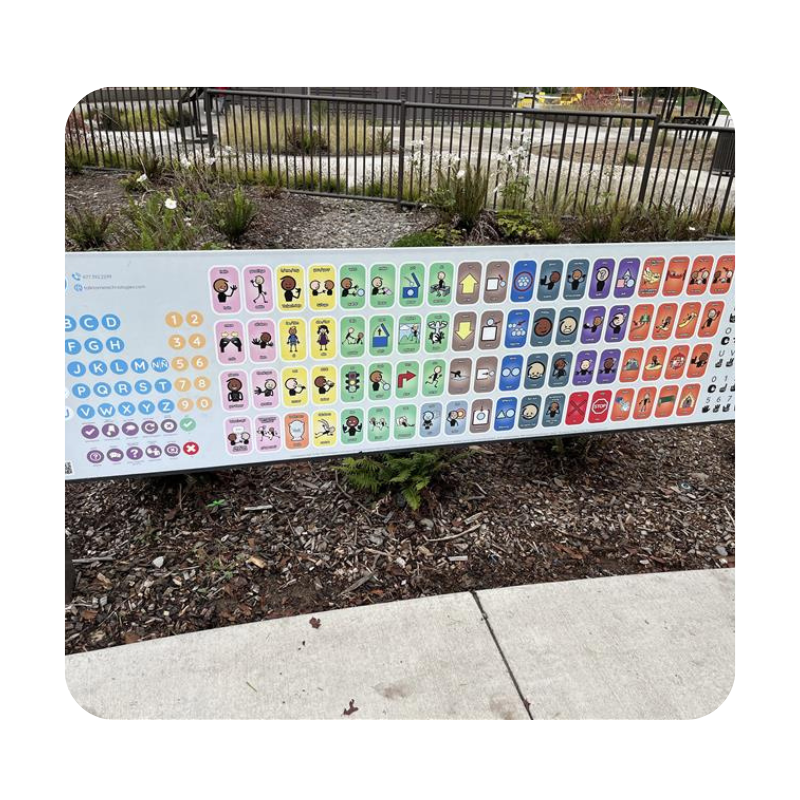
Alicia Alverson, Amanda Grabiner
Friday, 31 January
Andrea King, Alicia Alverson
Chris Gibbons, Simon Poole
Brittney Staton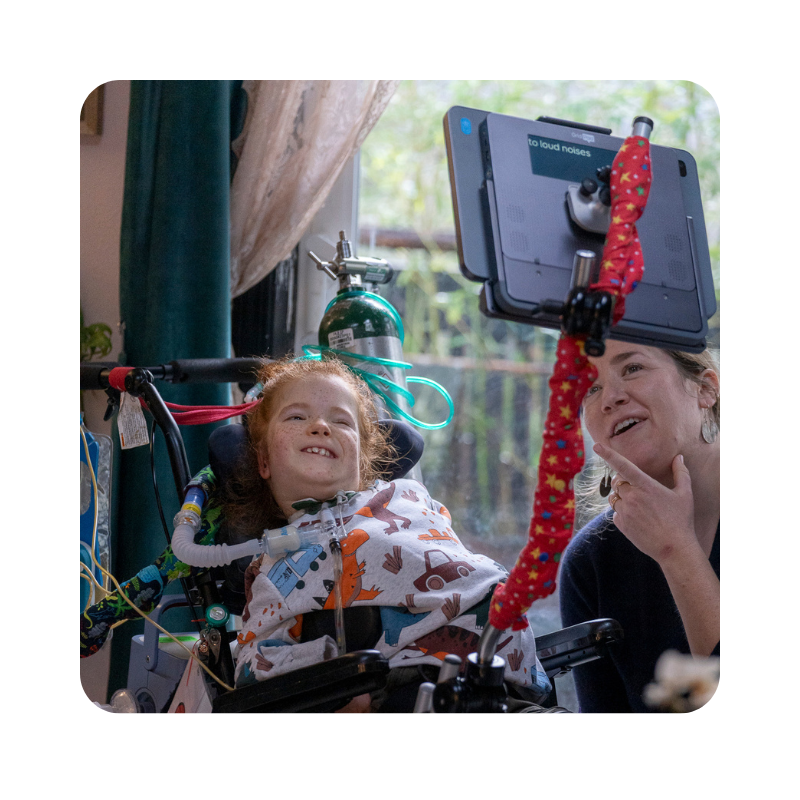
Andrea King, Alicia Alverson
Melanie Gylling, Alicia Alverson
Wyatt Franken, from Talk to Me Technologies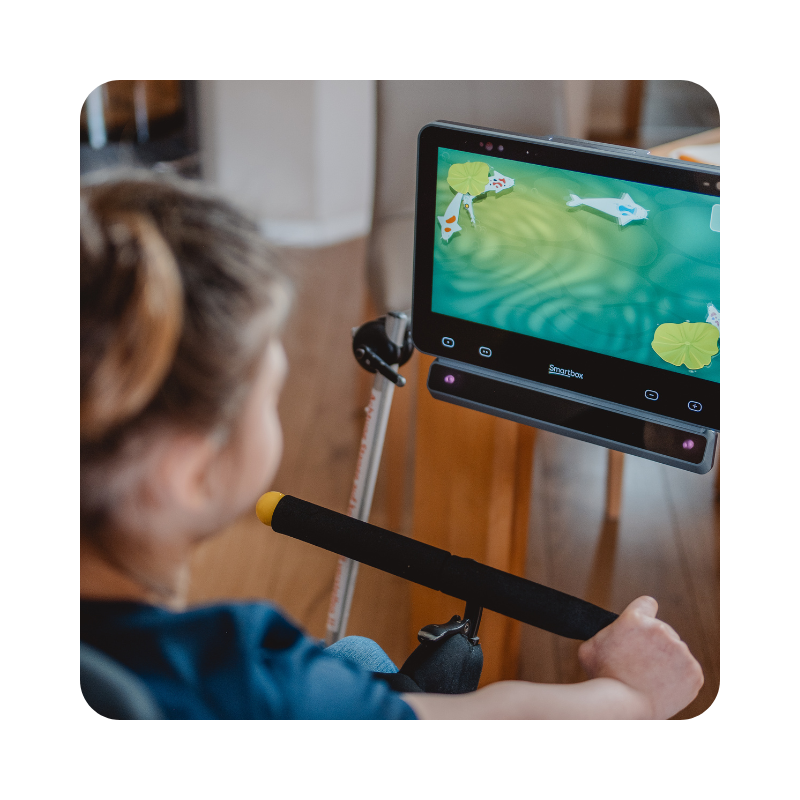
Saturday, February 1
Melanie Gylling, Maggie King and Abbie King from Boston Children’s Hospital
Chris Gibbons, Amanda Grabiner