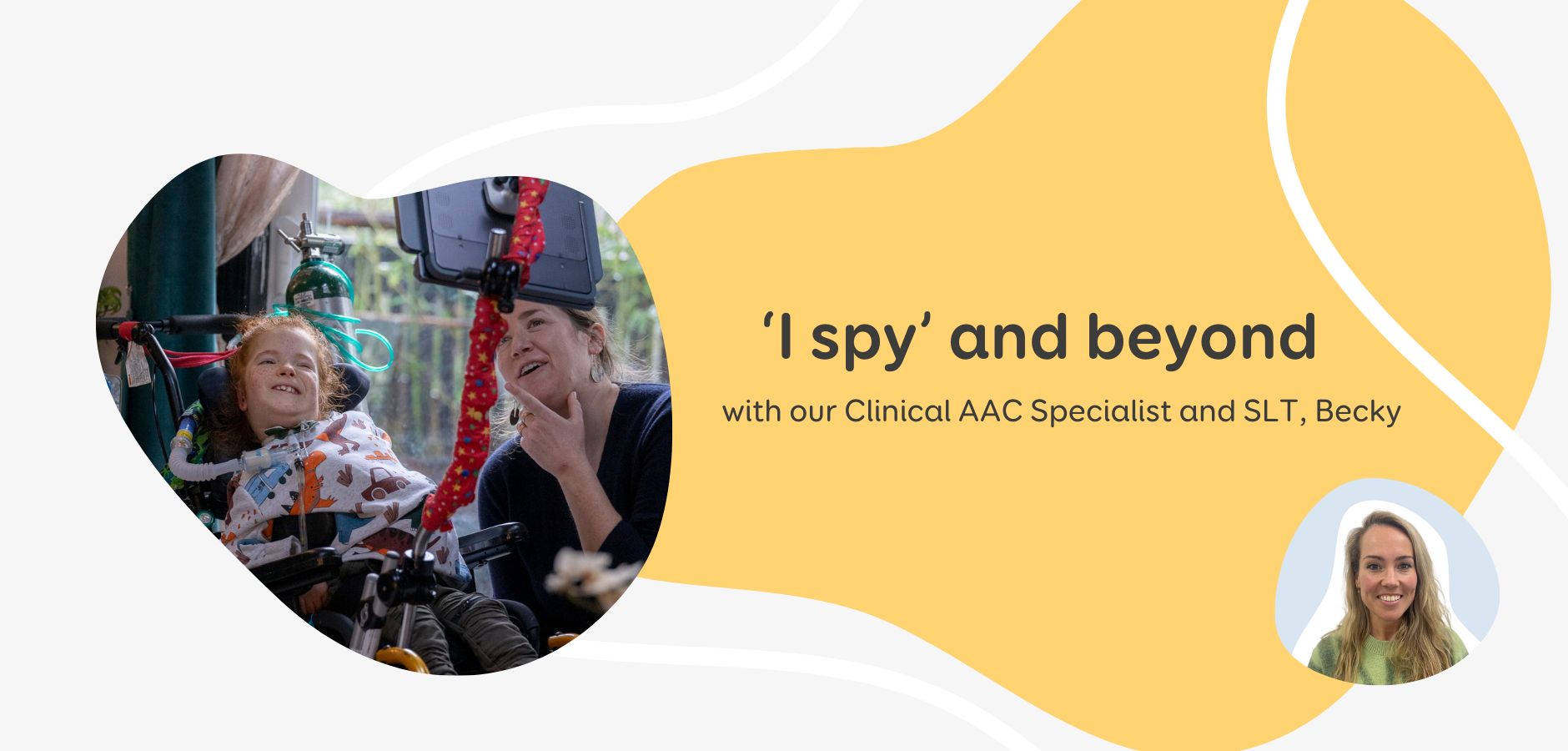
‘I spy’ and beyond
Playing games is a universal experience that brings people together, creating opportunities for connection, engagement, and learning. Games that involve two-way interaction, such as ‘I Spy,’ go beyond entertainment – they help develop attention skills, listening, reasoning, and vocabulary, all while encouraging social interaction in any environment. In this blog, Becky, Clinical AAC Specialist and SLT at Smartbox, explores how ‘I Spy’ can be adapted to be more inclusive using Grid. From customising grid sets to match different communication needs to supporting AAC users in different roles, discover how small adjustments can make a big impact in making play accessible for everyone. Most of us may have played or perhaps heard of ‘I Spy’, but for anyone less familiar, here’s a quick overview: As a speech and language therapist (SLT), a parent, and someone who played ‘I Spy’ as a child, I’ve seen firsthand how adaptable and accessible this game can be. Watching young children play in their own unique ways reinforced how much language and early literacy skills can develop through simple games like this. ‘I Spy’ is a game that is typically built on observation, listening, reasoning, and sharing clues. While vision and hearing are typically involved, Grid can make the game more inclusive with a few simple customisations, ensuring that everyone has a way to take part. Different grid sets can be used to match the communication method that works best for each player – whether that’s text-based or symbol-based vocabulary. For example, for players with hearing impairments, ‘I Spy’ could be adapted to rely more on visual and text-based cues, making it accessible and engaging. You could choose to use a grid set with letters, colours, or written descriptions (e.g., “I spy something that is red” or “I spy something that starts with B”). Small tweaks to your Grid setup can allow AAC users to give clues and take part in the game fully. In the video below, I will guide you through some of the different grid sets and vocabularies available in Grid that can be used to play ‘I Spy’: One of the great things about ‘I Spy’ is that it can be played in different ways, depending on who is involved. It may not always be the child who is the AAC user; sometimes, it’s a parent, sibling, or friend using AAC, creating a shared experience and a chance to connect through play. By adapting ‘I Spy’ for AAC users in different roles, the game becomes more than just entertainment; it’s an opportunity for shared joy, interaction, and meaningful communication. In your version of Super Core, you will need to copy the grids from the ‘I Spy’ add on and we recommend adding the jump to ‘I Spy’ from Leisure. In Leisure add a Jump cell command to navigate to the grid called ’08 Leisure Activities – I spy core TEEN’ to allow you to enjoy all the content. In your version of Voco Chat, you will need to copy all the grids from the ‘I Spy’ add on and we recommend adding the jump to ‘I Spy’ from Activities. In Activities add a Jump cell command to navigate to the grid called ‘Activities – Play – I Spy’ to allow you to enjoy all the content. Looking for some further support with how to customise your grid sets? Check out our guides on how to add and manage grid sets in Grid or how to add a grid from another grid in Grid for iPad. Explore these step-by-step instructions to get started!
What is ‘I Spy’?

Making ‘I Spy’ accessible with Grid
The different roles in ‘I Spy’
How to add the ‘I Spy’ grid sets from Online Grids to your own Grid
In Super Core
In Voco Chat