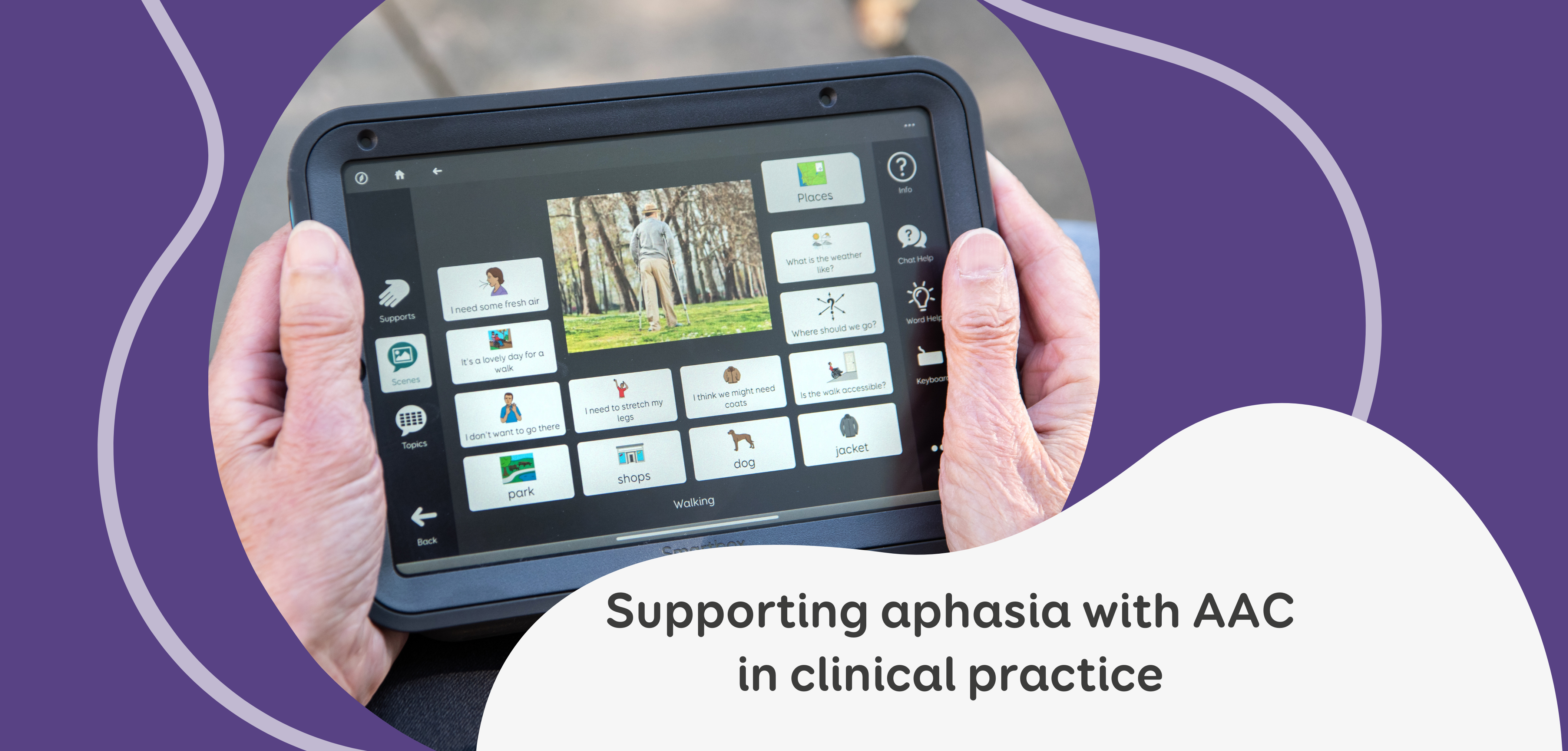
Supporting aphasia with AAC in clinical practice
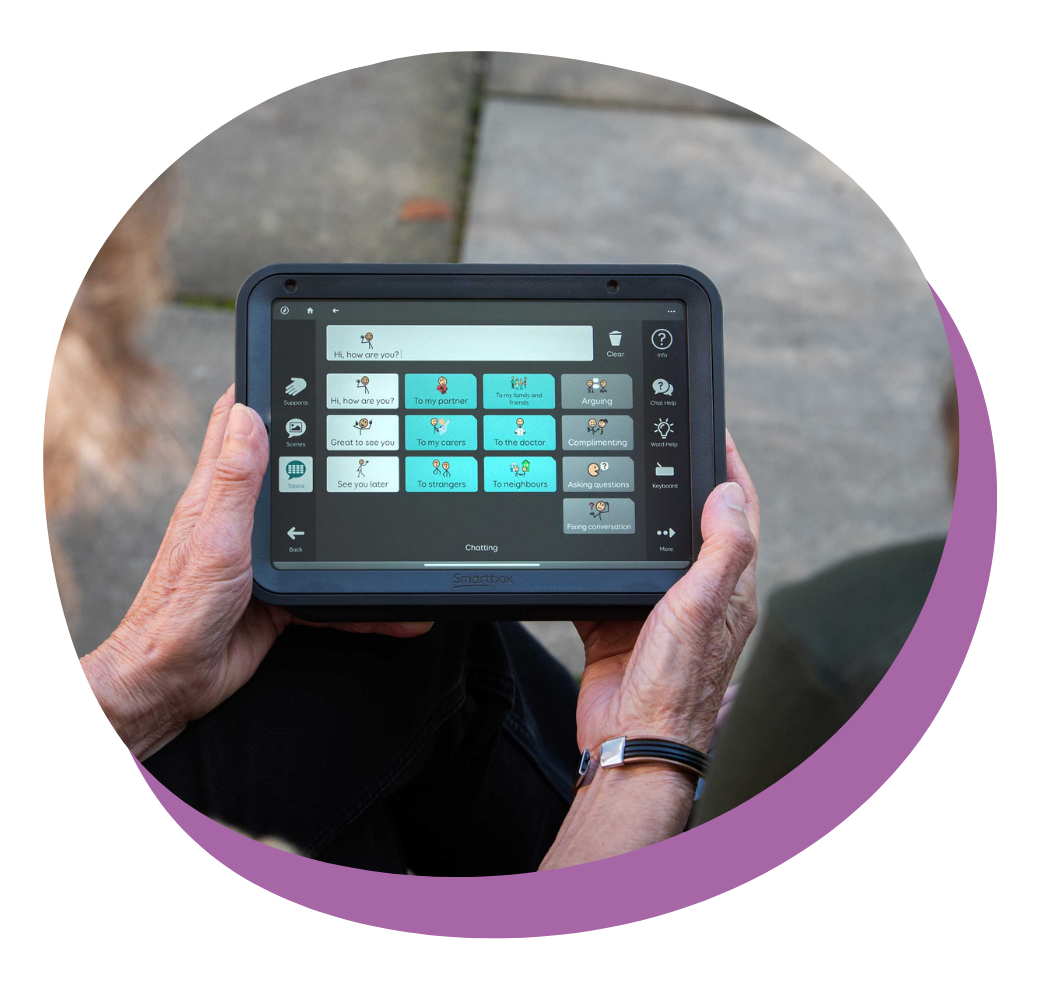
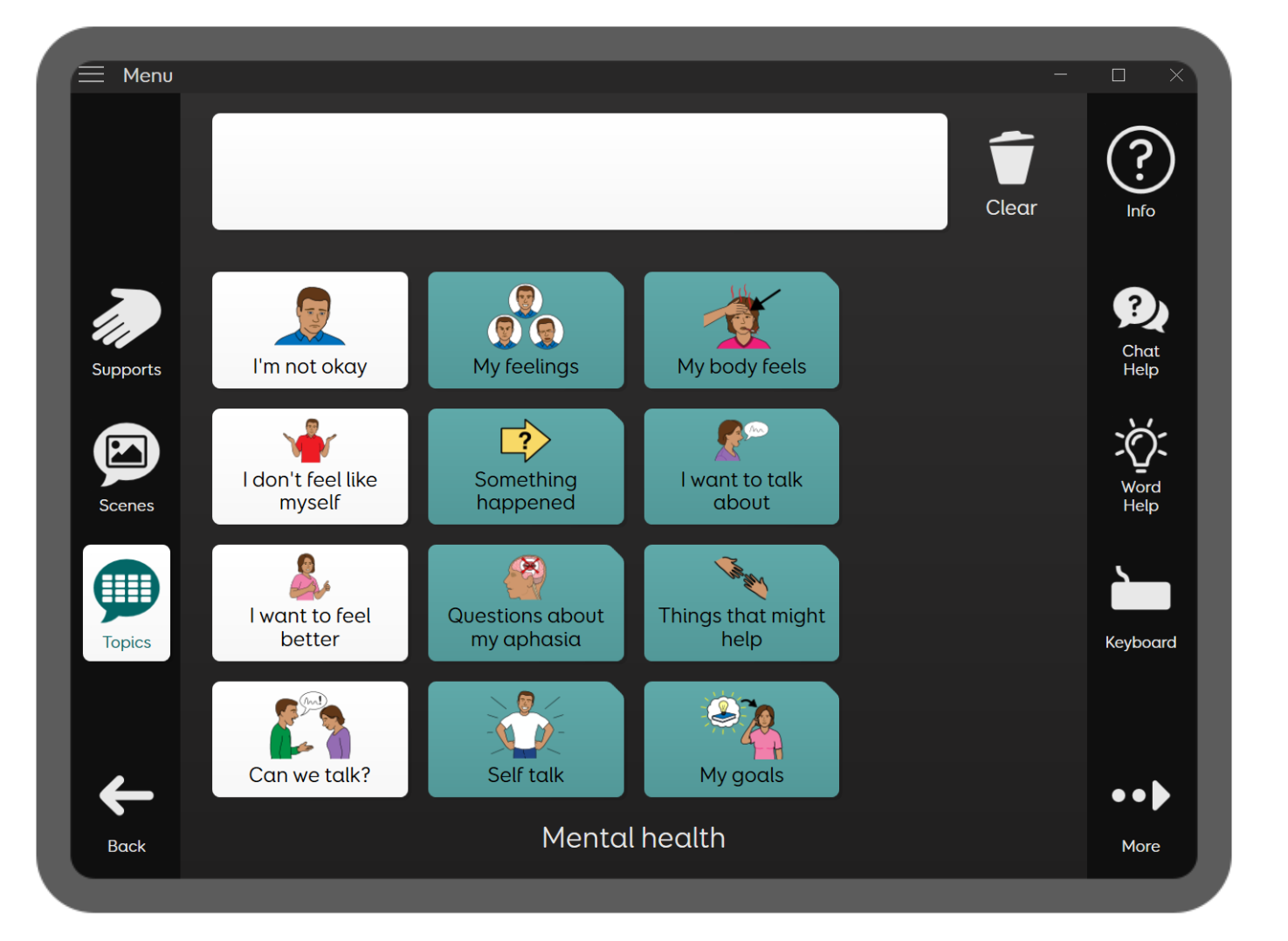
In this guest blog, SLT Alyssa shares how she has supported people with aphasia to explore new communication options using high-tech AAC. Drawing from her experience with two clients using Aphasia Duo, Alyssa reflects on how access to the right tools can build confidence, independence, and connection. I have supported two stroke survivors to use Aphasia Duo 16. Both clients experience difficulties finding the words they want to say (aphasia), as well as coordinating their mouth movements to speak accurately (apraxia of speech). They were frustrated at the limits of their previous communication methods, which included some speech alongside gestures, and were really keen to explore something new. Both clients are really motivated and creative communicators, who have so much more in their heads than they are able to express verbally! I was keen to trial high-tech AAC as an additional tool to support their communication because it offers a much wider range of vocabulary than they had previously been able to access. It’s brilliant to finally have Aphasia Duo as a system designed specifically for people with acquired language difficulties. The needs of these clients are quite unique in the AAC world, so having something tailored for them has really made a difference. One client is practising using AAC to help with word-finding difficulties. This has given her more independence in conversations; she’s less reliant on her communication partners to list yes/no options or guess what she’s trying to say. She’s also found that hearing the words spoken aloud by the AAC helps her repeat them more clearly herself. That’s been a huge boost to her speech confidence and overall communication skills. Another client has been using her AAC creatively to write full-sentence emails, whereas before, she mostly used emojis. She now keeps in regular contact with friends and family and uses her device to email both therapists and care staff. This has given her more control over how she communicates her needs, and it’s been great to see that independence grow. Both clients have found the Mental Health section really empowering, especially the “self-talk” phrases that help them through difficult moments. These have become an important part of their rehabilitation journey. One client has also really enjoyed being able to customise the voice on her device. Making it sound more like her, to reflect her accent and personality, has helped make the system feel like her own. This has been a really positive step. For people with acquired aphasia, the change in communication happens very suddenly, so using AAC is often completely new territory. It’s really important that everyone around them helps to normalise having the device present and gets involved in using it during conversations. It’s not only the responsibility of the person with aphasia to initiate using the device or to be able to navigate it. When AAC is approached as a shared tool, something used by families, carers, and friends together – it becomes much more powerful. Everyone benefits when communication is truly a team effort. Alyssa is a Speech and Language Therapist working at an integrated community stroke service, Sirona Care & Health. Her passion for language and communication began with studying foreign languages at university. She later stepped into the world of Speech and Language Therapy as an assistant at a brain injury rehabilitation centre, before qualifying as a therapist. Alyssa has now been in her current role for a year and a half, where she enjoys supporting the strength and creativity of people with aphasia. She is also developing a growing interest in AAC and finds it incredibly rewarding to see the positive impact it can have on her clients’ quality of life.
Can you tell us a little about the people you’ve supported using Aphasia Duo?

What drew you to using AAC in their support, and why did you choose Aphasia Duo in particular?
What differences have you seen since introducing AAC into their communication routine?
Are there particular features of Aphasia Duo your clients have found most useful?
What do you wish more people understood about aphasia and AAC?